
Eagle Bay at a Glance
- Where: Geographe Bay, on the eastern side of the Cape Naturaliste peninsula, Western Australia.
- Population: 120 at the 2021 census — most homes are holiday houses.
- Distance: roughly 3 hours south of Perth, 12 minutes from Dunsborough.
- Setting: inside Meelup Regional Park, which protects 577 hectares and 11.5km of coastline.
- Best for: calm, sheltered swimming — the coastline faces northeast.
- Whale season: September to mid-December, when whales pass close to shore with newborn calves.
- Wildflowers: August to November, including orchids found almost nowhere else.
Most people arrive in Eagle Bay for the water and leave without knowing much else about it. That is fair enough — the beach makes a strong case for itself. But this small stretch of the Western Australian coast has a French landing party, a lighthouse built with materials dragged up from the beach you are swimming at, and a population that multiplies several times over every summer.
Here are twelve things worth knowing before your next visit.
1. Only About 120 People Live Here
At the 2021 census Eagle Bay recorded a population of 120. What makes that figure more interesting is the occupancy rate: on census night, only around 13% of the dwellings here were occupied. Eagle Bay is a suburb of holiday houses that sit empty most of the year and fill completely over summer and the school holidays.
That is why the place feels the way it does. There is no supermarket, no petrol station, no strip of shops. In February it hums. In June you can have the beach to yourself.
2. The Whole Bay Sits Inside a Regional Park
Eagle Bay lies within Meelup Regional Park, which protects 577 hectares and 11.5 kilometres of coastline running from Dunsborough up to Bunker Bay. The park takes in Meelup Beach, Castle Rock, Curtis Bay, Gannet Rock and Point Picquet, and it is the reason the bushland here runs right down to the sand rather than being subdivided.
3. The Water Is Calm Because of Which Way the Coast Faces
The beaches along this stretch face northeast, tucked in behind Cape Naturaliste and sheltered by Geographe Bay. That orientation blocks the Indian Ocean swell that batters the west-facing surf coast a few kilometres away at Yallingup.
It is the single reason Eagle Bay works so well for families. The water is usually flat, the visibility is good for snorkelling, and the vegetation grows down to the water’s edge because it is not being salt-blasted by onshore weather.
Related → Top Beaches to Visit Around Eagle Bay
4. A French Expedition Landed Here in 1801 Looking for Water
On 30 May 1801, a landing party from Nicolas Baudin’s scientific expedition to New Holland came ashore at Eagle Bay searching for fresh water. They did not find any. The expedition sailed on, but not before Baudin named the headland above the bay Cape Naturaliste, after one of his two ships.
A memorial to the landing was unveiled at Eagle Bay in 2001, two hundred years after the event. Point Picquet, along the coast towards Meelup, is named after a sub-lieutenant from the same French crew.
5. This Is Wadandi Noongar Country
Long before any of the above, this coastline was — and remains — the country of the Wadandi Noongar people, whose name translates as Saltwater People. Their connection to this stretch of coast goes back thousands of years.
The names have carried through. Meelup means place of the moon rising, for the way the full moon appears to lift out of the water across Geographe Bay. The Wadandi name for Cape Naturaliste is Kwirreejeenungup, meaning place of beautiful views to the north. Several of the walking trails through the park follow bidi, traditional tracks that linked significant sites along the ridge.
6. The Lighthouse Was Built With Materials Landed at Eagle Bay
When Cape Naturaliste Lighthouse was constructed in 1903, there was no road capable of carrying what was needed. The limestone was quarried about a kilometre and a half away and hauled to the site by bullock wagon. Most of the remaining materials and apparatus — including the first-order Fresnel lens and its turntable, together weighing around 12 and a half tons — were landed at Eagle Bay and carted up from there.

The beach where families now set up umbrellas was, for a period in 1903, an unloading point for one of the heaviest pieces of optical equipment ever shipped to Western Australia.
7. It Was Australia’s Last Manned Lighthouse
Cape Naturaliste Lighthouse was automated in 1978, but a keeper remained on site until 1996 — the last in the country. The three original keepers’ quarters are still standing, and one now houses a museum.
The tower stands 20 metres tall on a headland 123 metres above sea level, and still uses the original Chance Brothers lens installed when it was first lit. Guided tours climb 59 steps to the balcony. It is one of the few genuinely historic things you can walk into within fifteen minutes of Eagle Bay.
8. Whales Pass Here With Their Newborn Calves
Eagle Bay catches the better half of the whale migration. Humpbacks and southern rights head north into warmer waters between May and August, but that leg runs down the exposed western side of the cape and out to sea.
The return journey is the one to be here for. From September through to mid-December the whales come back south with calves born over winter, and because they are travelling with young they hug the sheltered coast — which is exactly where Eagle Bay sits. Mothers and calves resting in close, calm water, rather than distant blows on the horizon.
You do not need a boat. Point Picquet, a few minutes along Eagle Bay-Meelup Road, sits above a deep channel the whales use daily and is the best mainland vantage point on this side of the cape.
There is a longer history here too: in the 1840s, whalers used the lookouts along this coastline to spot for the Castle Bay Whaling Company.
9. The Dolphins Are Residents, Not Visitors
Unlike the whales, the bottlenose dolphins here are permanent. Resident pods use Eagle Bay and Meelup Beach regularly and are often visible from the sand, particularly early in the morning when the water is glassy. Sea eagles work the same stretch of coastline.
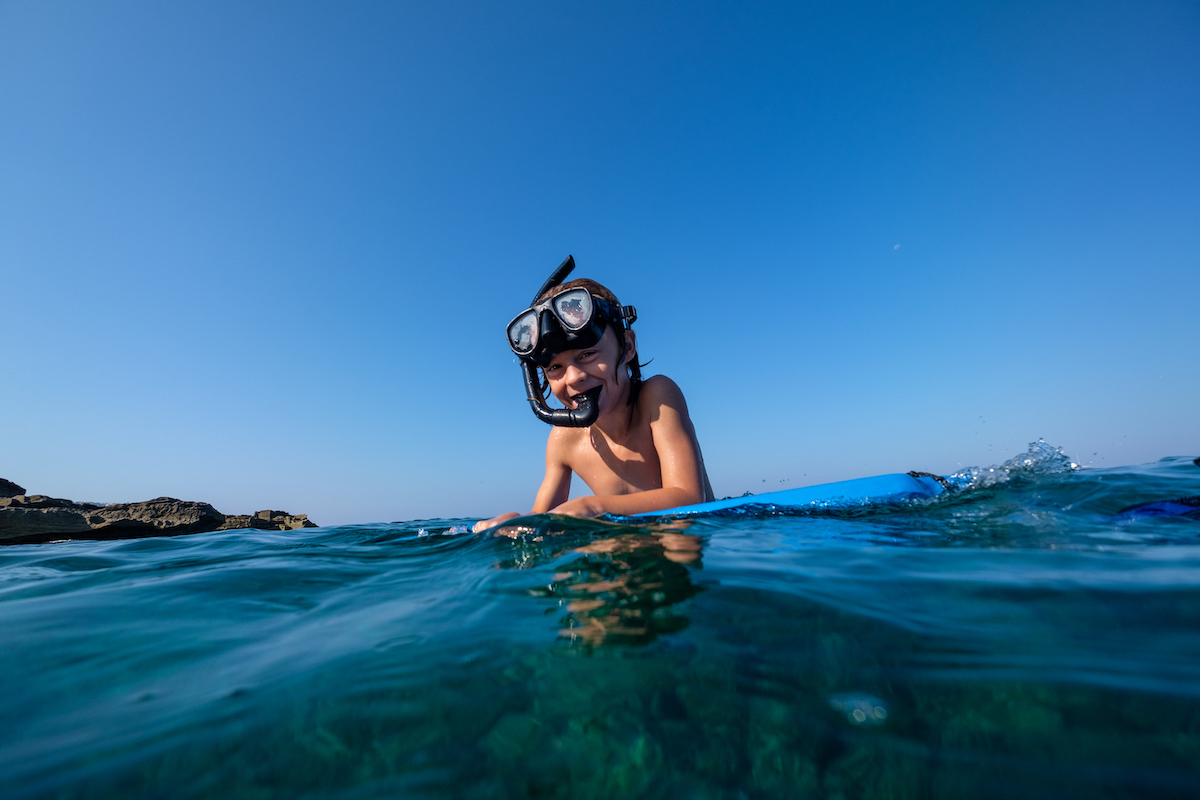
The waters off this coast sit within the Ngari Capes Marine Park, and the calm, clear conditions make it one of the better places in the state for children to learn to snorkel.
10. Spring Brings Orchids Found Almost Nowhere Else
From roughly August to November the coastal heath through Meelup Regional Park flowers. Along the trails between Eagle Bay and Castle Rock you will find spider, donkey, enamel and jug orchids, along with wattles, hakeas and hibbertia — and the Dunsborough spider orchid, which is rare and closely associated with this park.
It is a genuine reason to visit outside summer. Mild weather, no crowds, and a coastline in flower.
11. There Was a Working Salmon Fishery Here in the 1950s
Before the holiday houses, Eagle Bay was a working stretch of coast. A commercial salmon fishery operated here through the 1950s. Earlier still, in the late 19th century, a local farmer named Stewart Keenan cut a track from his Eagle Bay farm through to the timber mill settlement at Yelverton — one of the first routes connecting this bay to anywhere else.
12. You Are at the Start of the Cape to Cape Track
The 135-kilometre Cape to Cape Track runs the length of the Leeuwin-Naturaliste Ridge from Cape Naturaliste in the north to Cape Leeuwin in the south. Its northern trailhead is at the lighthouse, minutes from Eagle Bay, which means you can walk a section as a morning outing and be back for lunch.
Offshore, the scuttled naval destroyer HMAS Swan lies in Geographe Bay and is one of Western Australia’s best-known dive wrecks.
Related → Top 10 Must-Visit Attractions Around Eagle Bay
For a place with 120 residents and no shops, Eagle Bay carries a lot of history — and most of it is still visible if you know where to look. The memorial by the beach, the lighthouse on the hill, the tracks through the heath: it is a quieter story than the one the postcards tell, and a better one.
Related → Eagle Bay: What You Need to Know Before You Go
Need Accommodation in Eagle Bay?
With only 120 residents and no hotels, staying in Eagle Bay means renting a house — and there are not many that sleep a large group properly.
Eagle Rise, our Eagle Bay holiday home, sleeps up to 10 across four bedrooms in the main house and a self-contained studio, on five acres of private bushland two minutes’ drive from the beach. There is a private pool, an epic Games Zone, and a 10-seat dining table — which makes it work equally well for two families travelling together, a multi-generational holiday, or a milestone weekend with friends.